
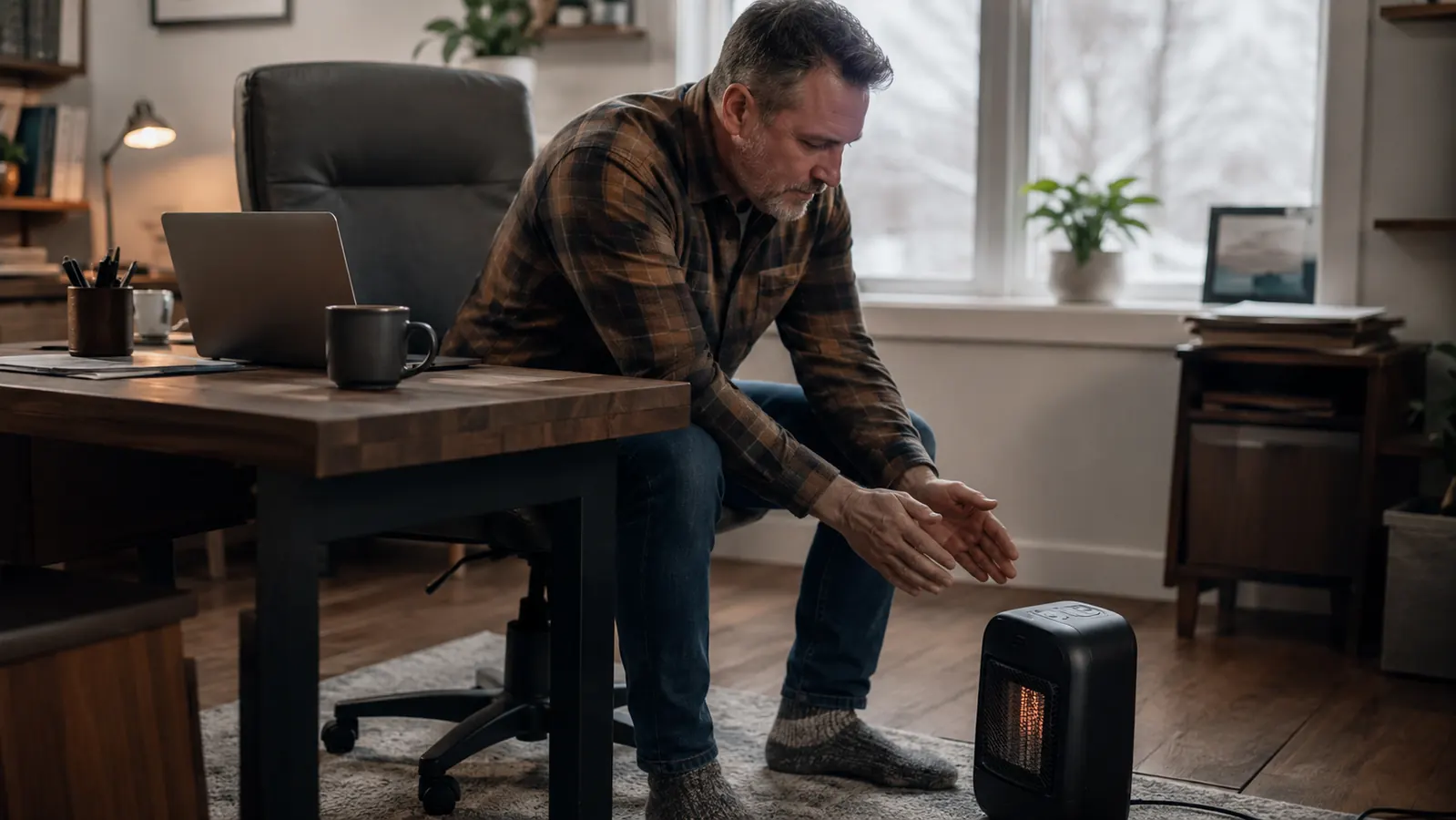
How to stay warm at your desk when the rest of the house is set to 66 degrees every winter is a question I answer for at least a dozen Columbus clients every October, right on schedule. Central heat is built for the whole house, not for the one corner of a converted spare bedroom or drafty basement where you actually sit for eight hours a day. By the time the thermostat finally satisfies whoever controls it, your hands are stiff, you have got a blanket over your knees like you are eighty years old, and you are typing slower than you should be. That is not a comfort problem anymore, it is a productivity problem.
The fix is not turning up the whole house and eating a higher gas bill every month. It is heating the six square feet around your body instead of the six hundred square feet around your house. I have walked probably forty Columbus home offices through this exact swap, and the tool I point people to almost every time is the Amazon Basics Ceramic Mini Space Heater, a 500 watt unit small enough to sit on the corner of a desk without eating up real workspace. It is not going to heat a whole room, and it should not try to. It is built to put warm air directly on you while the rest of the house stays exactly where the thermostat wants it. Below is the exact process I walk clients through, step by step, including the safety habits that matter more than people think they do.
Cold Fingers Slow You Down. This Fixes It in Two Minutes.
You don't need to fight your family over the thermostat or run up the gas bill heating rooms nobody is in. A small heater aimed directly at you solves the actual problem, which is that your body is cold, not that the house is cold. See today's price on the Amazon Basics Ceramic Mini Space Heater.
Amazon Check Today's Price on Amazon →Step 1: Measure Your Space and Pick the Right Wattage
Before you buy anything, look at where you actually sit. A desk heater like the Amazon Basics unit is built for personal space, roughly the area under a desk or the few feet between your chair and a nearby wall, not an entire home office with twelve foot ceilings. At 500 watts, it is intentionally undersized for whole-room heating, and that is the point. You want a heater that cannot realistically overheat a small enclosed area, which keeps both your power bill and your risk down.
If your office is genuinely large, more than 150 square feet or so with poor insulation, a single small unit will struggle no matter what you do with placement. In that case you are better off pairing it with the central system rather than expecting a desk heater to replace it. I cover that tradeoff in more detail in my Amazon Basics desk heater versus central heat comparison, including where the breakeven point actually sits on a typical Columbus utility bill.
Wattage also affects your outlet draw, which matters more than people expect in an older Columbus house with original wiring. A 500 watt unit like the Amazon Basics heater pulls a fraction of what a larger 1500 watt space heater does, which means it is far less likely to trip a breaker shared with your monitor, printer, and phone charger. If you have ever had a bigger heater trip the circuit mid-call, that alone is reason enough to size down rather than up.
Step 2: Set Up a Dedicated, Safe Outlet
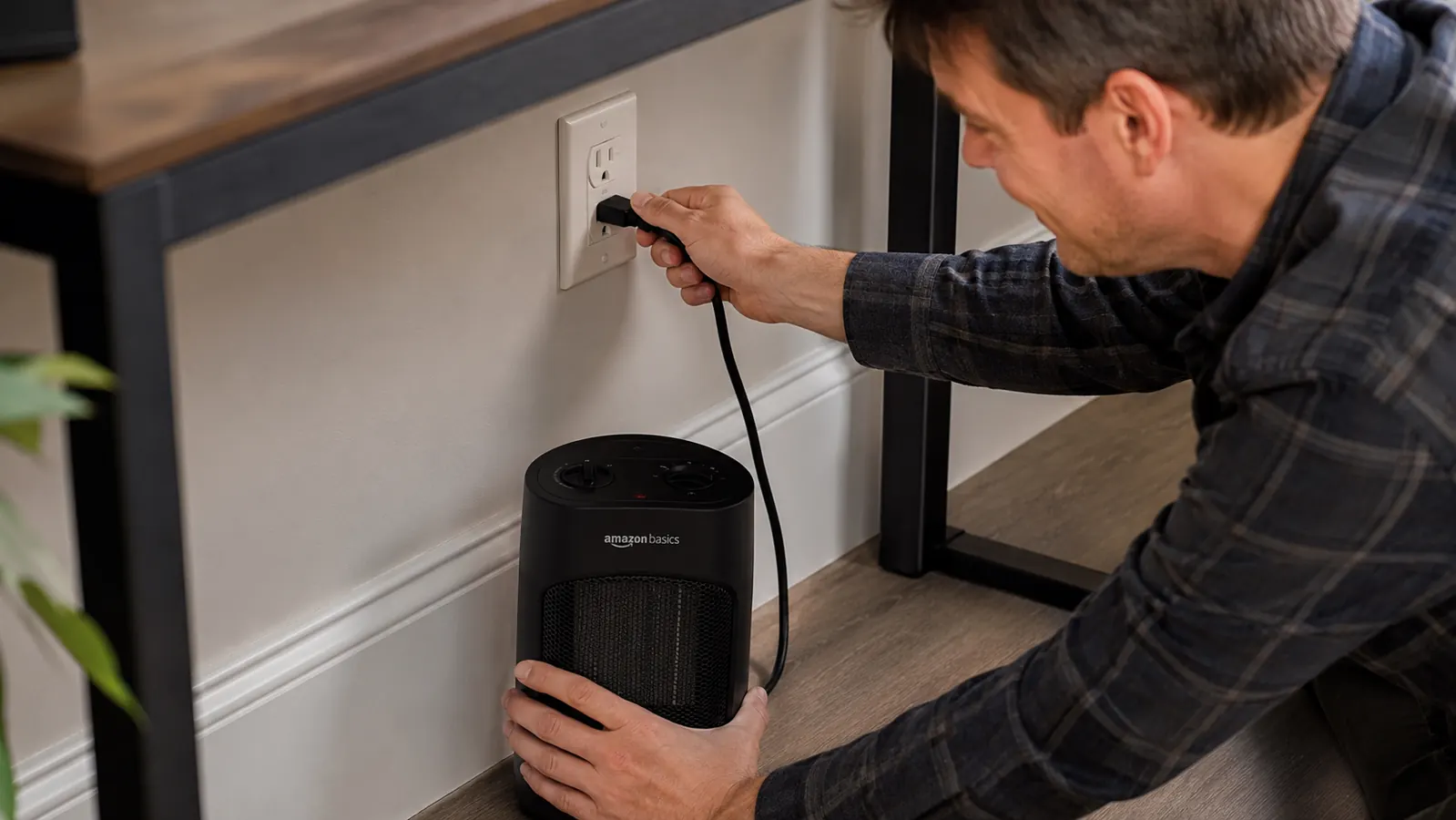
Plug the heater directly into a wall outlet. Do not run it through a power strip, a surge protector, or an extension cord, even a heavy duty one. Space heaters draw a steady, significant current, and cords rated for lamps or laptop chargers were never built to carry that load for hours at a time. I have seen power strips get warm to the touch under a space heater load, and that is your early warning sign to unplug immediately and stop using that setup.
Check the outlet itself too. If it is on the same circuit as other high draw appliances, a mini fridge under your desk or a monitor setup with multiple chargers, you can trip a breaker or, worse, overload a circuit that was not sized for it. A dedicated outlet, or at least one you have confirmed is not shared with anything else heavy, is worth the two minutes it takes to check your breaker panel labels.
One more outlet detail worth checking, look at the outlet itself for any discoloration or a loose feeling plug before you trust it with a heater. Older homes around Columbus, especially anything built before the 1990s, sometimes have outlets that have never carried a real load. A heater is a good stress test for a bad outlet, and it is much better to find that out on a Tuesday afternoon than after leaving one running unattended.
Step 3: Position the Heater for Direct Warmth, Not Wasted Heat
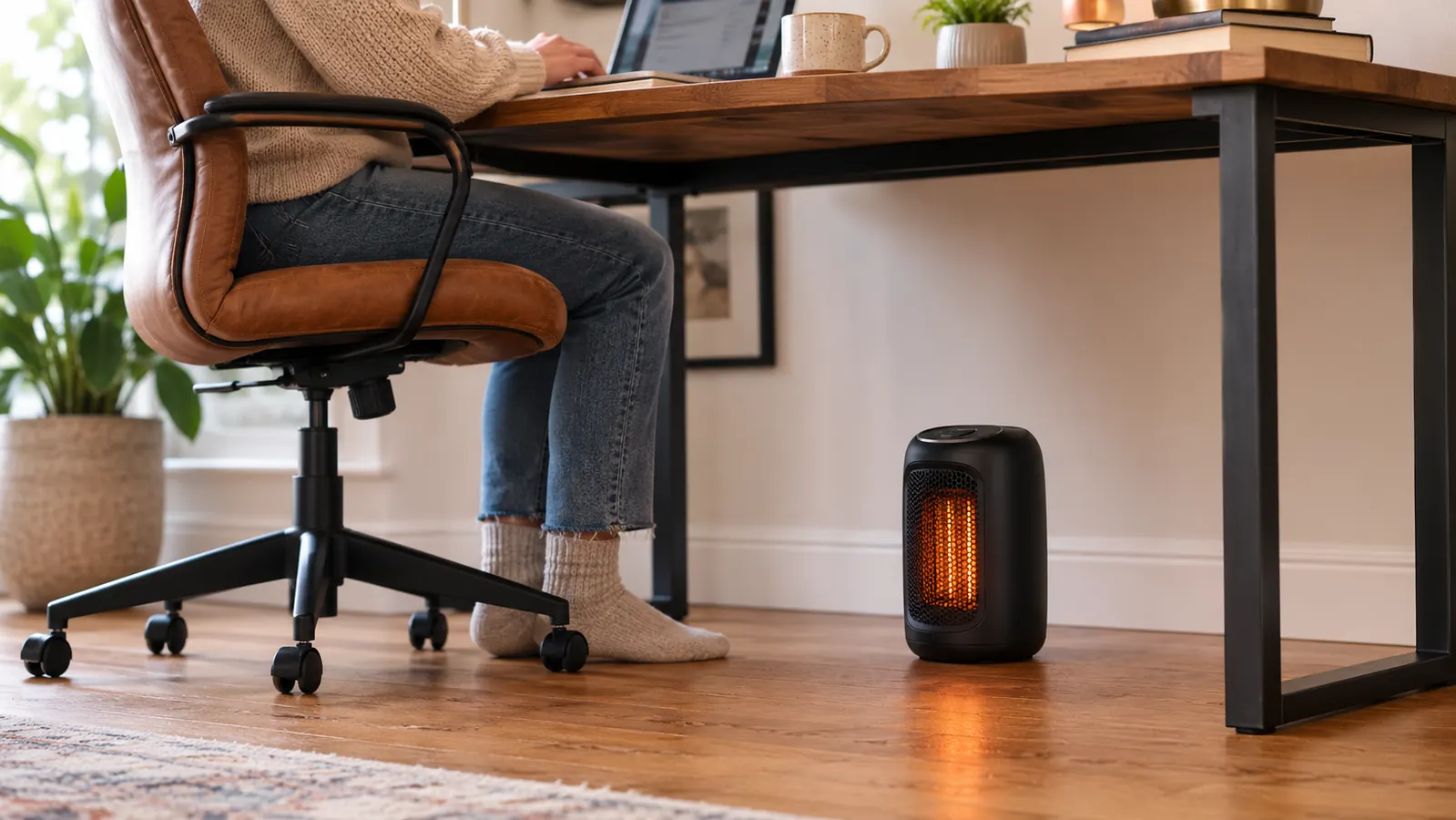
Place the heater on a hard, flat, stable surface, the floor under your desk or a corner of the desk itself if there is room, angled so the airflow hits your legs or torso directly. Warm air rises and spreads, so the closer it starts to you, the less of that heat gets wasted warming empty air on its way up. Most clients get the best results with the unit about two to three feet from their feet or knees, not blasting straight at a monitor or paperwork.
Keep at least three feet of clearance from anything flammable, curtains, paper stacks, a trash can full of shredded documents, or a pet bed. That distance rule is not optional advice, it is the same clearance the manufacturer states in the product manual, and it is the single most common thing people skip because their desk area is cramped. If three feet is not realistic where your desk sits now, rearrange the desk before you plug in the heater, not after.
Direction matters as much as distance. Aim the heater at your lower body rather than your face or hands if you are typing, since dry blowing air across your hands for hours can leave your skin feeling parched by 4pm. Angling it toward your shins and feet keeps you warm without drying out the air right where you need dexterity most.
Step 4: Use the Auto Shut-Off and Tip-Over Protection the Way They're Meant to Be Used
The Amazon Basics heater includes tip-over protection, meaning it cuts power automatically if it is knocked off level, which happens more than you would think when a cord gets caught under a rolling chair or a dog brushes past a desk. Do not treat that feature as a backup you never expect to need. Test it once when you first set the unit up, tip it gently to confirm it shuts off, so you know it is working before you actually rely on it during a busy workday.
Overheat protection is the second layer, and it is why you should never block the intake or exhaust vents with papers, cables, or a coffee mug set too close. If the unit ever feels hotter than usual on the housing or starts cycling on and off rapidly, unplug it and let it cool completely before using it again. I walk through exactly how these two protections behaved during six weeks of daily use, including one afternoon my cat knocked the unit off my desk, in my honest review of the Amazon Basics desk heater.
It is worth knowing these protections are a backup, not a replacement for attention. I have talked to more than a few clients who assumed tip-over protection meant they could run the heater anywhere, cords loose, pets free to roam, and just trust the safety features to catch every mistake. They work well, but they are a last line of defense, not a reason to get careless about the basics in steps two and three.
Step 5: Build a Daily On/Off Routine You Won't Forget
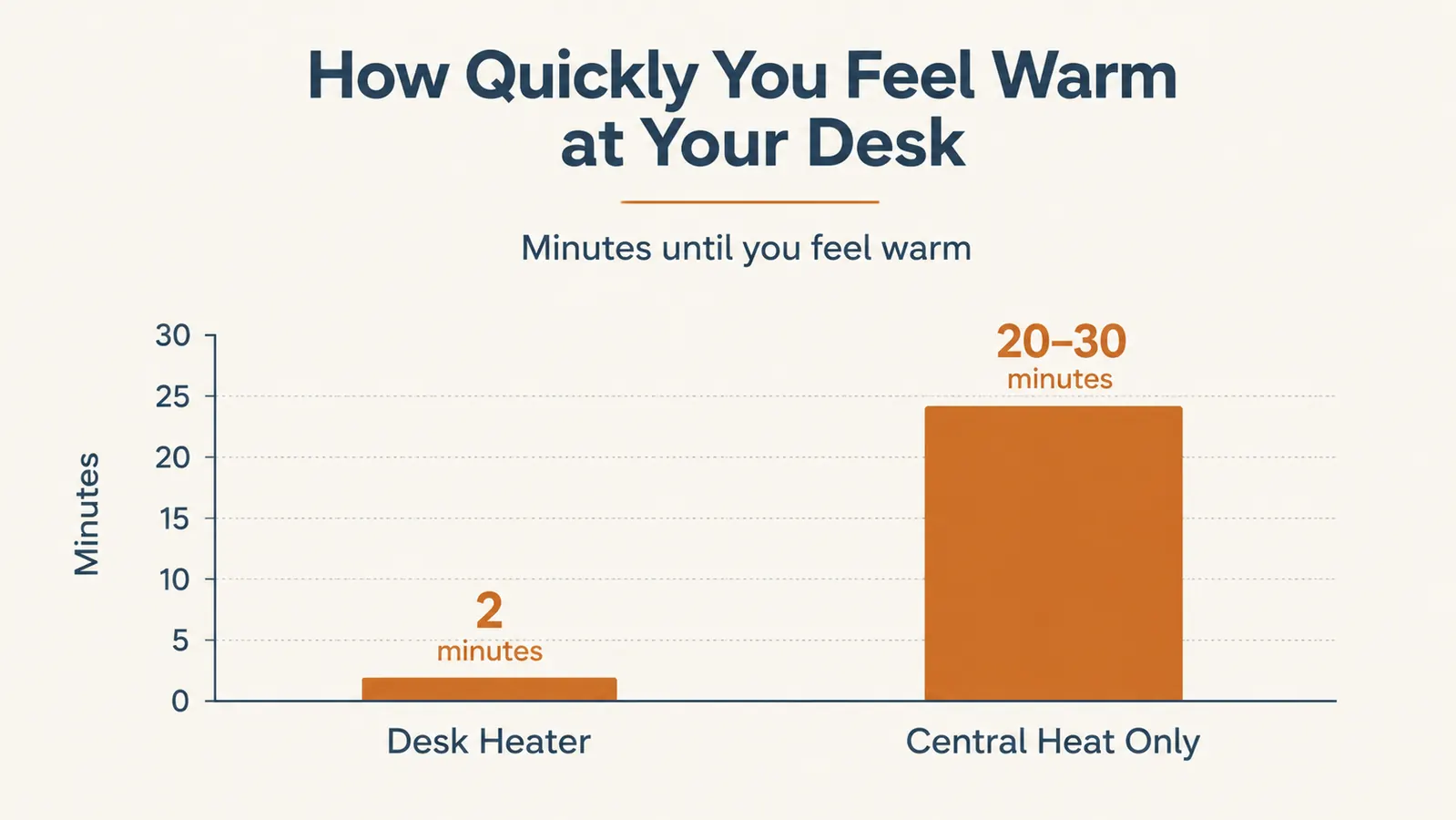
The single habit that prevents almost every space heater problem is simple, never leave it running unattended. Turn it on when you sit down, turn it off when you get up for lunch, a call in another room, or the end of the day. The Amazon Basics unit heats up fast, most clients tell me it takes under two minutes to feel a real difference, so there is no real cost to turning it off every time you leave your desk for more than a few minutes.
I keep mine on the same power strip as my desk lamp, which sounds like it contradicts step two, but the heater itself is always plugged straight into the wall while the lamp and other low draw items share the strip separately. That way flipping one switch when I leave the room kills the lamp and any temptation to leave the heater running, while the heater stays on its own dedicated line whenever it actually is running. Small habit, but it is the difference between a heater that is safe for years and one that eventually gets left on overnight by accident.
If remembering to unplug it feels like one more thing on a busy day, tie it to something you already do without thinking, standing up to refill your water bottle or grabbing your coat at the end of the day. Clients who anchor the habit to an existing routine stick with it. Clients who rely on willpower alone tend to leave it running overnight within the first month, which is exactly the scenario the safety features exist for but you should not need them to catch.
What Else Helps When One Heater Isn't Enough
A desk heater solves the person-level cold, but if your whole office is drafty, pair it with cheap wins that reduce how much heat you are fighting in the first place. A draft stopper along the bottom of an exterior door, a rug or foam mat under your feet if you are on tile or concrete, and closing an unused vent to redirect central airflow toward your office all reduce the load on the space heater and make the warm air it does produce last longer between cycles. None of that replaces direct personal heat at your desk, it just means the Amazon Basics unit is not fighting a losing battle against a room that is bleeding heat out through the floor. For a full breakdown of where a small heater like this earns its keep against just running the furnace longer, see my comparison of desk heating versus central heat.
If you are still deciding whether a small heater is even worth adding to your setup versus just living with a colder office, I laid out ten specific reasons it is worth it, from lower utility cost to faster warmup than waiting on central heat, in ten reasons a desk heater beats a cold office. It covers the cost comparison in more detail than I can fit here.
The habit that matters more than any feature on the box is the one nobody writes about, turn it off every single time you leave the desk.
Stop Losing Afternoons to a Cold Desk
Five steps, twenty minutes of setup, and you stop dreading your own office every winter morning. That is the whole pitch for a heater this small and this cheap.
Amazon Check Today's Price on Amazon →