

I've been setting up home offices for other people for about twelve years now, first on a facilities team and now on my own as a consultant based here in Columbus, Ohio. Every fall, without fail, someone tells me their basement or converted garage office turns into a walk-in freezer once the furnace stops reaching that far corner of the house. Last October I picked up the Amazon Basics Desk Heater for my own basement setup, mostly to see if a twenty dollar unit could actually hold up to daily use before I recommended it to anyone else, and not the kind of product I'd normally trust without testing it myself first.
It's been running under my desk almost every weekday from late October through March, so this is a full winter of real use, not a first-week impression. I want to be upfront that I didn't expect much going in. A 500-watt ceramic heater that fits in your palm sounds like a stocking stuffer, not a serious tool. Five months later my opinion has shifted, with a few caveats I'll get into.
The Quick Verdict
A genuinely useful, well-made little heater for the space directly around your desk, not a room heater, and the safety features held up to real daily use without a single scare.
Amazon Check Today's Price →Tired of Typing With Frozen Fingers Every Morning?
The Amazon Basics Desk Heater warms the six square feet around your chair in a few minutes flat, without running your whole furnace for one cold corner of the house. Check today's price and see if it fits your setup.
Amazon Check Today's Price on Amazon →How I've Used It in My Own Office
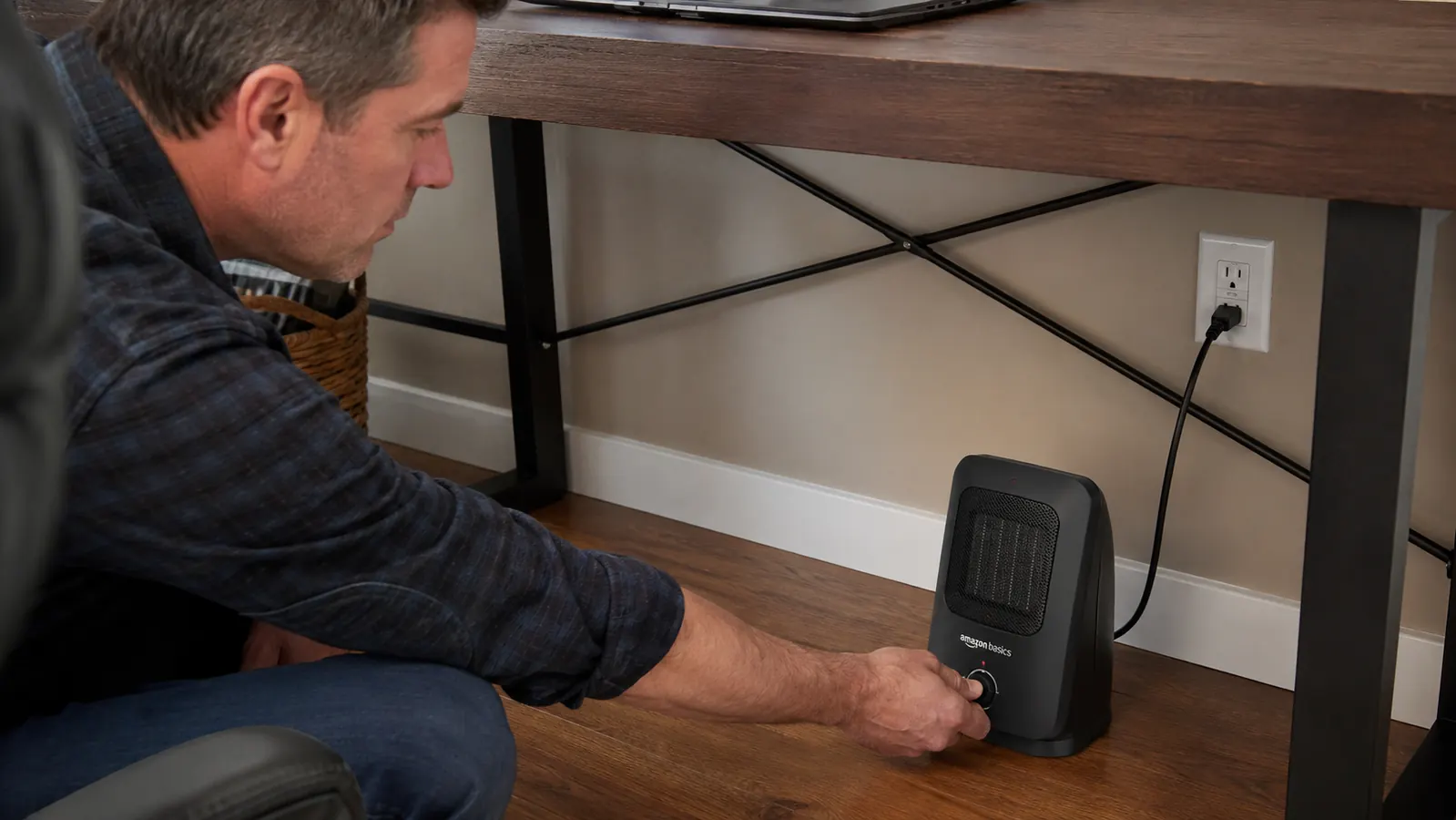
My basement office sits at the far end of the house from the furnace, and by November the floor temperature down there was consistently in the low 60s even with the vents open. I set the Amazon Basics heater on the floor about eighteen inches from my feet, angled so the airflow hits my legs and lower back rather than blasting straight at my face. That placement took some trial and error the first week, mostly because I initially had it too close and my ankles were roasting while the rest of me stayed cold.
I run it most mornings from about 7am to 10am, then again for an hour or two in the late afternoon once the sun goes down and the room cools off fast. That's roughly four to five hours a day, five days a week, for a full winter. I never leave it running unattended overnight or when I step out for more than a few minutes, which is standard practice for any space heater and something I'd tell any client regardless of brand.
The dial has two heat settings plus a fan-only mode, and I use the low setting more than I expected. On a genuinely cold morning, low is enough to take the edge off within about ten minutes, and I only bump it to high when the basement dips into the 50s, which happened maybe a dozen times all winter during a stretch of single-digit outdoor temps in January.
One morning in February stands out because it's the closest thing I have to a stress test. Power had flickered overnight, my furnace was cycling weird, and the basement had dropped to around 54 degrees by the time I sat down at 6:45am. I flipped the heater to high and kept working, and within about twenty five minutes I'd stopped noticing the cold at all. That's not scientific, it's one data point, but it's the kind of morning that actually tells you whether a cheap heater is worth keeping around.
Heat Output: How It Actually Performs After Five Months
Let's be clear about what 500 watts can and can't do. This is not going to heat a 12x14 basement room, and Amazon Basics doesn't claim it will either, it's marketed specifically as an office desk heater, and that's exactly how it performs. In the immediate zone around my chair, roughly a five to six foot radius, it makes a real difference within ten to fifteen minutes. Outside that radius, you're basically not getting anything from it.
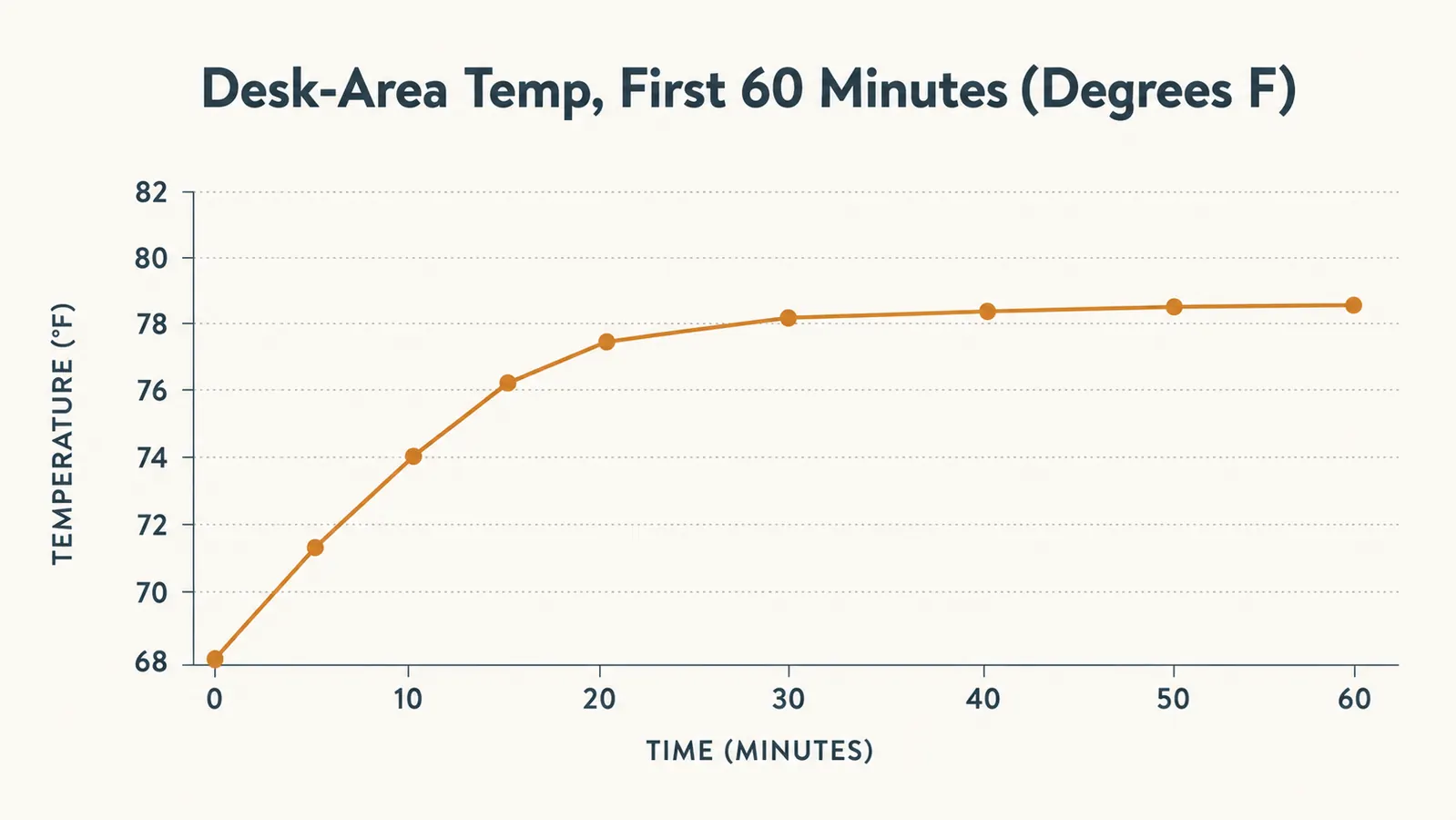
I tracked the temperature right at desk height with a cheap thermometer for the first hour on a particularly cold January morning, and it climbed from about 58 degrees to the low 70s within twenty minutes, then leveled off there. That's consistent with what a ceramic element this size should do, fast warm-up, quick plateau, not a slow room-wide heat soak like a bigger oil-filled radiator would give you.
The fan noise is noticeable but not distracting on a video call, roughly what you'd expect from a small desk fan running at medium speed. A couple coworkers have asked what the background hum was during calls, but nobody's complained about it being disruptive. If you're recording audio for anything sensitive, you'll want it off or angled away from your mic.
I also kept a rough eye on the electric bill difference, since that's usually the first question clients ask once they see how small the unit is. Running it four to five hours a day, five days a week, at 500 watts works out to a few dollars a month at typical Ohio electric rates, nowhere close to what it costs to run a furnace longer or push the whole-house thermostat up a few degrees just to fix one cold room. That math is really the whole case for a desk heater like this one.
Safety Features I Actually Tested, Not Just Read About
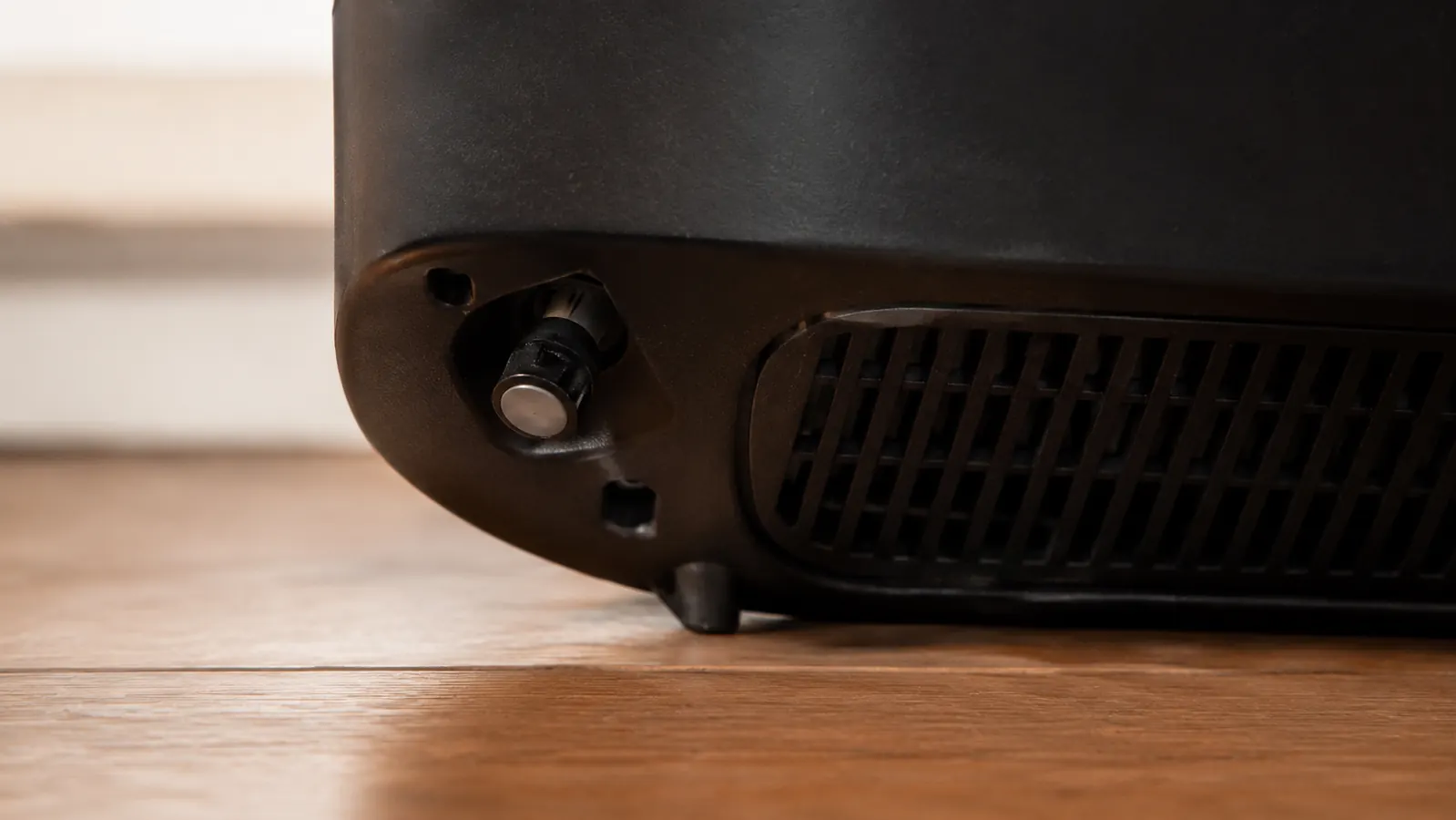
This is the part I take seriously with any heater recommendation, because a cheap space heater is one of the more common causes of house fires when people cut corners on safety hardware. The Amazon Basics unit has automatic tip-over protection, meaning it cuts power the instant it's knocked off its base, and I tested this on purpose early on by nudging it over with my foot while it was running on high. It shut off immediately, no delay, no residual heat kicking it back on when I set it upright either, you have to manually flip the switch again.
It also has overheat protection built into the ceramic element, which is designed to shut the unit down if internal temperatures climb past a safe threshold, say if something blocked the vents or it ran in an enclosed space too long. I never triggered this one intentionally since doing so on purpose felt like a bad idea, but I did notice it never got hot to the touch on the housing itself even after running for two or three hours straight, which is a good sign the internal thermal cutoff is doing its job before things get out of hand.
A few honest cautions that apply to this heater and really any small electric heater in a home office: never plug it into a power strip or extension cord, always go straight into a wall outlet, keep it at least a couple feet from paper, cables, and anything flammable under your desk, and don't run it while you're away from your desk or asleep. I keep mine on a hard floor, not carpet, and I've never had it sitting near curtains or fabric. None of that is specific to Amazon Basics, it's just good practice, but I mention it because I've seen clients get careless with small heaters exactly because they seem too small to matter.
If you've got kids or pets who wander through the office, I'd also add the vents get warm to the touch even though the outer housing stays cool, so I keep mine tucked under the desk out of easy reach rather than sitting out in the open floor space. It's a small habit, but it's the kind of thing worth building in from day one rather than after a close call.
What I Considered Before Settling on This One
Before landing on the Amazon Basics heater, I looked at a couple of the taller ceramic tower heaters and one small radiant panel style that mounts under the desk lip. The tower heaters put out more air volume but they're bulkier, most won't tuck under a desk without eating into legroom, and the ones in this price range had noticeably worse reviews on tip-over protection, which was a dealbreaker for me given how often I'm moving my chair around during the day.
I also seriously considered just skipping a dedicated heater and adding a space heater rated for a whole room instead, figuring bigger would mean fewer compromises. That plan fell apart on cost and practicality fast, a room-rated unit draws more power, costs more upfront, and honestly overheats a small basement office if you run it at the same schedule I use for this one. For a single desk zone, the smaller footprint won out every time I ran the comparison.
For anyone weighing this against just cranking the thermostat for the whole house, I put together a full side-by-side on the Amazon Basics desk heater versus running central heat that breaks down the actual cost difference over a winter, and it's a bigger gap than most people expect.
Build Quality and What's Held Up Over a Full Winter
The housing is plastic, lightweight at 1.4 pounds, and after five months of daily use I haven't seen any cracking, discoloration, or warping near the vents where the heat exits. The dial still turns smoothly with the same resistance it had on day one, no looseness or grinding. For a unit this cheap, I honestly expected some wear by now and haven't seen it.
The cord is on the shorter side, about four feet, which was fine for me since my outlet is close to the desk, but it's worth measuring your own setup before you buy so you're not stuck needing an extension cord, which I'd actually avoid running to a heater anyway per the safety note above. If your outlet is far from where you want the heater sitting, this is a real limitation to plan around, not an afterthought.
I did notice a faint plastic smell the first two or three times I ran it, which is common with new ceramic heating elements burning off manufacturing residue and went away completely by the fourth or fifth use. If you buy one, run it in a ventilated space the first couple times and don't panic if you smell it briefly.
What I Liked
- Tip-over safety switch fired instantly and reliably every time I tested it
- Never got hot to the touch on the outer housing, even after 2-3 hour runs
- Fast warm-up, noticeable difference at the desk within 10-15 minutes
- Held up with zero cracking, warping, or dial wear after a full winter of daily use
- Low setting is enough for most mornings, so it doesn't run loud or hot unnecessarily
- Cheap to run, only a few dollars a month at typical usage
Where It Falls Short
- Short cord (about 4 feet) limits placement if your outlet isn't close by
- Only heats a small radius, not a full room, by design
- Faint plastic smell for the first few uses as the element breaks in
- Fan noise is audible on quiet video calls, though not disruptive
- Two heat settings only, no fine-grained temperature control
It's not trying to heat your house. It's trying to keep your hands warm enough to type, and after a full winter, that's exactly what it did every single morning.
Who This Is For
If you work from a basement, converted garage, sunroom, or any part of the house the furnace treats like an afterthought, this fills a real gap without you having to run space heating for the whole floor. It's also a smart pick if you're the type who's cold at your desk but everyone else in the house is comfortable, since it lets you fix your own zone without an argument over the thermostat. One reader wrote in after trying it and told me how a mini desk heater saved her whole winter working from an unheated spare room, which tracks with what I've seen from clients too.
Who Should Skip It
If you're trying to heat an entire room, a garage workshop, or anything bigger than the immediate space around a desk, skip this and look at a larger oil-filled or ceramic tower heater instead, you'll just be disappointed by the coverage. It's also not the right pick if your outlet situation would force you into an extension cord, since that's a safety compromise I wouldn't recommend for any small heater, Amazon Basics or otherwise. For a straight desk-zone heater used the way it's designed to be used, though, it did exactly what I needed for a full Ohio winter.
Ready to Stop Losing Feeling in Your Fingers by 9am?
A full winter in, the Amazon Basics Desk Heater is still the first thing I recommend to clients with a cold corner office. See today's price and specs on Amazon before the next cold snap hits.
Amazon Check Today's Price on Amazon →