
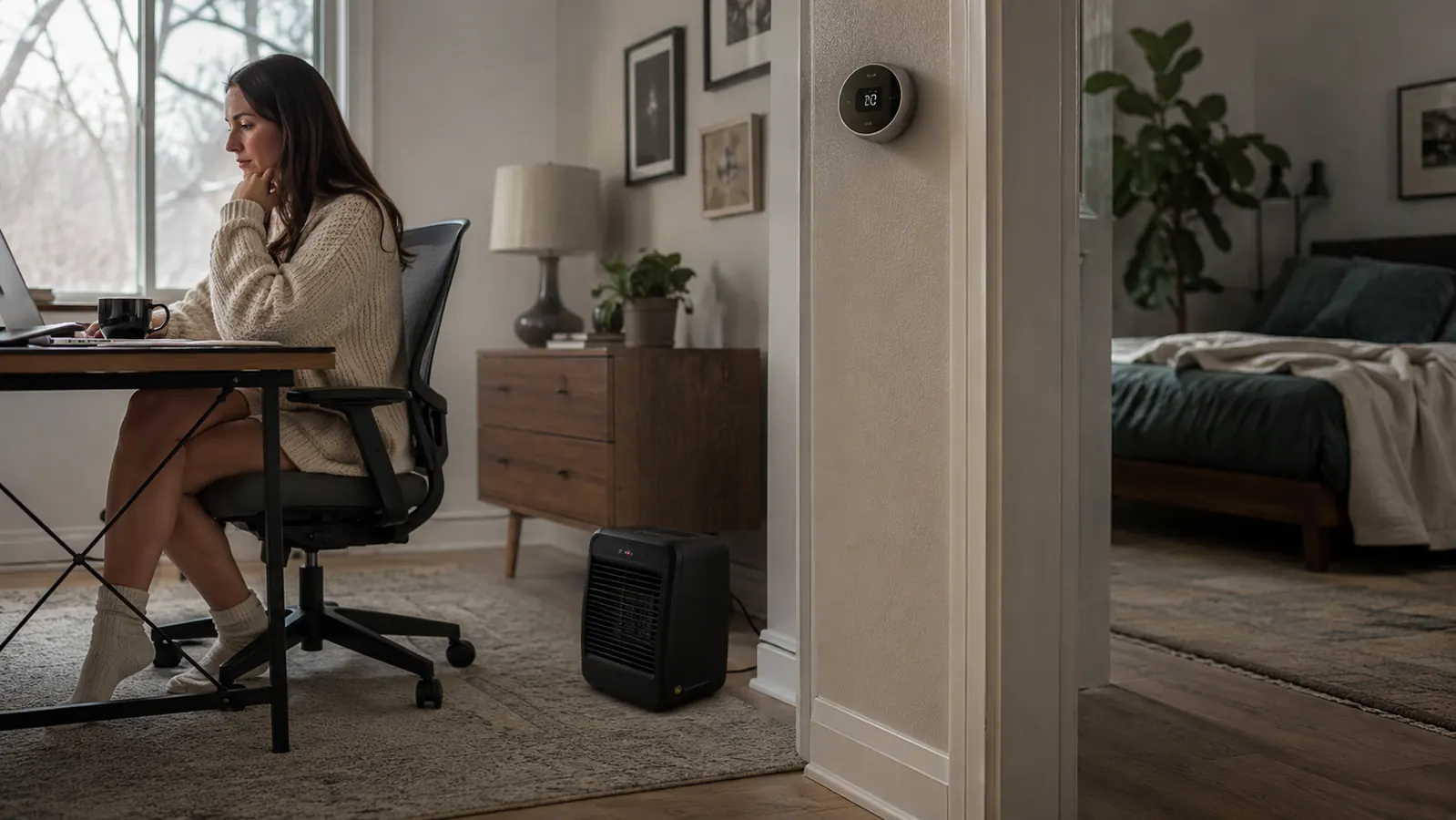
Every October I get some version of the same question from clients here in Columbus: is it actually worth buying a little desk heater, or should I just bump the thermostat and let the furnace handle it? I get why the question comes up. Central heat feels like the default option, it's already installed, and running a small ceramic heater under your desk can feel almost silly by comparison. But after running an Amazon Basics Ceramic Portable Mini Space Heater through two full Ohio winters in a converted spare bedroom that never quite gets warm on its own, I can tell you the two aren't really competing for the same job. One heats a person. The other heats a house. Mixing those up is exactly where people waste money and stay cold anyway.
Short answer, if you're the only one in the room and you just need to stop shivering at your keyboard, the Amazon Basics desk heater wins on cost, speed, and control, and it isn't close. If you've got other people in the house who also need heat, or the whole home is genuinely cold rather than just your office, central heat is still doing a job the little ceramic heater was never built to do. Here's the actual side-by-side, not just my gut feeling on it. I've set up home offices for enough clients around Columbus to know the wrong answer here isn't picking the wrong appliance, it's assuming there's only supposed to be one winner in the first place.
| Amazon Basics Desk Heater | Central Heat (Whole-House Furnace) | |
|---|---|---|
| Cost to Run Per Hour | About 6 to 7 cents an hour at 500W and average electricity rates | Roughly 30 to 60 cents an hour for a mid-size furnace, more in older homes |
| Warm-Up Time | Noticeably warm at the desk in about 3 minutes | 10 to 20 minutes to raise whole-house temperature even a couple degrees |
| Coverage Area | One person, roughly a 3 to 4 foot radius at a desk | Every room in the house, whether it's occupied or not |
| Placement Flexibility | Sits on the floor or desk, moves to any outlet in the house | Fixed vents and ductwork, can't be aimed at one cold spot |
| Upfront Cost | Around $18 to $20 at current Amazon pricing | Already installed, but a full HVAC replacement runs thousands |
| Noise Level | Near silent, ceramic element with no blower fan noise | Audible blower cycling on and off through the ductwork |
| Safety Features | Automatic tip-over shutoff, cool-touch housing, lightweight at 1.4 lbs | Requires filter changes and periodic professional service |
| Best For | One person working at a desk in a room that runs cold | Warming an entire occupied house evenly through winter |
Where the Amazon Basics Desk Heater Wins
The Amazon Basics heater wins hardest on cost per hour, and the gap isn't small. Running a 500W ceramic heater for a full eight-hour workday costs somewhere around 50 cents at typical Ohio electricity rates. Running your furnace an extra two or three degrees warmer for that same stretch, especially in an older two-story house with ductwork that doesn't reach the back bedroom evenly, adds up to real money over a whole winter. I've had clients tell me they were nervous about their gas bill every January before they ever tried isolating the heat to just where they sit. A five-dollar month in electricity for a desk heater is a different conversation entirely than a fifty-dollar bump in the furnace bill for heat that's mostly warming rooms nobody's sitting in.
It also wins on speed and control. My spare-bedroom office sits above an unheated garage, and the vent up there was always the last one to warm up no matter how high I set the thermostat downstairs. The Amazon Basics heater gets noticeably warm at my feet in about three minutes flat, ceramic elements just heat up fast, and the tip-over shutoff means I don't think twice about leaving it running while I step out for coffee. If you want the full list of reasons this actually beats sitting in a cold room and hoping the furnace catches up, I laid out ten of them in a piece on why a desk heater beats a cold home office, and most of them come down to this same idea, heat the person, not the building.
Where Central Heat Wins
Central heat still earns its keep the moment you're not the only one who needs to be warm. If you've got a spouse working from the kitchen table, kids doing homework in another room, or you just want the whole house at a livable temperature so nobody's walking around in a coat, a single desk heater can't touch that. It was never designed to. A 500W ceramic unit is built to warm the small pocket of air right around one person's chair, not push heat through a hallway and into three other rooms. Ask it to do that job and you'll be disappointed, then blame the heater for something it was never rated to handle.
Central heat also wins on set-and-forget reliability once it's running. A programmable thermostat holds a whole house at a consistent temperature all day without anyone touching a switch, and it works the same whether you're at your desk, in the kitchen, or asleep. A desk heater only helps the room it's plugged into, and only while it's turned on, which means it's a solution for the person sitting at that specific desk, not a substitute for actual home heating during a genuinely cold stretch where even the living room feels like a walk-in cooler.
Freezing at your desk while the thermostat says 68? The furnace isn't the fix.
The Amazon Basics Ceramic Mini Space Heater warms up in about 3 minutes and runs for pennies an hour, without turning your whole gas bill into a monthly gamble. Check today's price on Amazon before you crank the thermostat one more degree.
Amazon Check Today's Price on Amazon →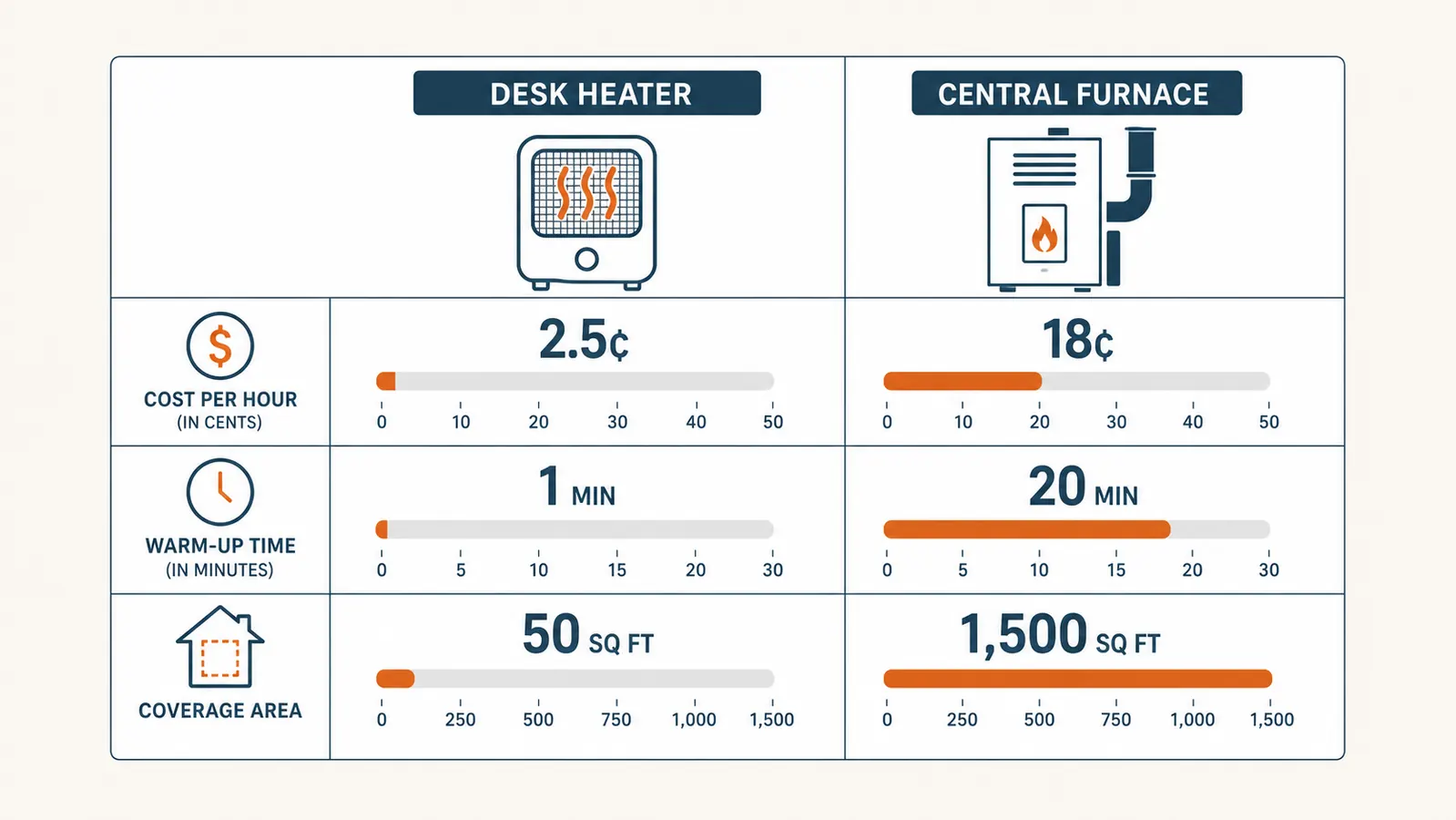
The Safety Question People Actually Ask
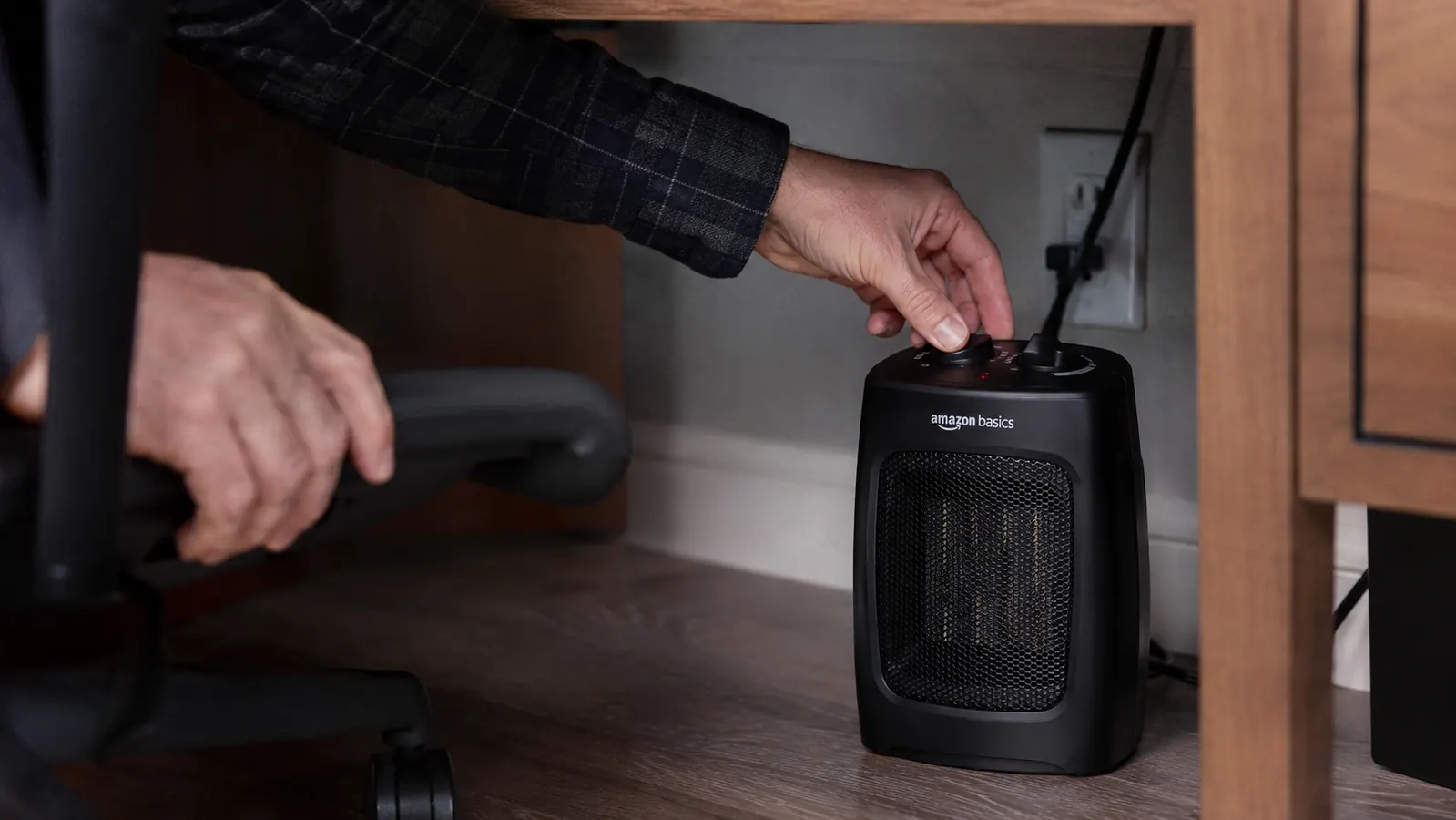
Every time I recommend a space heater to a client, someone asks if it's safe to leave running under a desk all day, and it's a fair question given how many older space heaters have a bad reputation. The Amazon Basics unit weighs about 1.4 lbs, has an automatic tip-over shutoff, and the ceramic element stays cool to the touch on the housing itself, which matters if you've got a curious dog wandering the office like I do. I still follow the basic rules I'd tell any client, keep it on a hard floor rather than carpet, give it a couple feet of clearance from paper, cables, or anything flammable, and don't run it on an extension cord if you can help it. Central heat doesn't ask you to think about any of that day to day, which is a genuine point in its favor, but it also isn't something you're plugging in fresh each morning either.
The tip-over shutoff specifically has mattered more than I expected. My office chair has knocked the heater over more than once reaching for something on the floor, and it clicks off within a second every time rather than continuing to run on its side. That's not a feature you think about until you need it, and it's the difference between a minor annoyance and an actual hazard. Central heat obviously doesn't have this failure mode at all, since there's nothing sitting on your office floor to tip over, but it also isn't solving the specific cold-hands-at-the-keyboard problem that sent you looking for a desk heater in the first place.
The Real Cost Difference, Month by Month
I ran the numbers for a handful of clients last winter because everyone assumes their heating bill is fixed and unavoidable, and it usually isn't. A 500W heater running six hours a day, five days a week, comes out to roughly $12 to $15 a month in most parts of Ohio, depending on your utility rate. Bumping a whole-house furnace up even two or three degrees for the same stretch, particularly in a two-story home with an office at the far end of the ductwork, regularly adds $30 to $60 a month to a gas bill during peak winter. That's not a small rounding error, that's the difference between a heater paying for itself in its first week of use and a thermostat habit quietly draining your budget every January and February.
The catch is that this math only holds if you're the only person who needs the heat. Once you've got two or three people in different rooms all needing to be warm at the same time, running two or three separate space heaters can eat into that savings fast, and at some point it's genuinely cheaper and safer to just run the furnace a degree warmer. I walk through exactly how to figure out which situation you're in, plus placement tips that make a huge difference in how much heat actually reaches you, in a full guide on how to stay warm at your desk with a small space heater. It's worth five minutes before you decide either way.

What Actually Happens in a Cold Columbus Office
My own office is the test case I trust most, since I'm in it every day. It's a converted spare bedroom above the garage, and no matter what I set the downstairs thermostat to, that room runs a solid five degrees colder than the rest of the house from November through March. For the first winter I just kept nudging the thermostat up, which warmed the living room nicely and did almost nothing for my hands at the keyboard. The second winter I put the Amazon Basics heater on the floor near my feet instead, and the difference wasn't subtle. I stopped wearing fingerless gloves indoors, which sounds like a joke until you've actually typed a full workday in them. I wrote up the full season-long breakdown, including what happened when the outdoor temperature dropped into single digits, in my full winter review of the Amazon Basics desk heater if you want the day-to-day details.
What surprised me most wasn't how warm the heater got, it's a small unit, it's not pretending to be a furnace. What surprised me was how much less I noticed the cold everywhere else once my hands and feet were warm at the desk. Comfort at your extremities changes how tolerant you are of a slightly cool room overall, which is part of why a desk heater can feel like it's doing more than its 500W rating suggests. It's not magic, it's just targeting the exact spot where cold actually bothers you during an eight-hour workday.
Central heat warms the building. A desk heater warms the person who actually has to sit still in it for eight hours.
Who Should Buy Which
Buy the Amazon Basics desk heater if you work from a single cold room, if you're the only one who needs the extra warmth during the day, or if you've been nudging the whole-house thermostat up just to fix one uncomfortable corner of the house. At around $18 to $20, it pays for itself within the first couple of cold weeks compared to running the furnace warmer for hours nobody else is using. Stick with central heat, or use it alongside a desk heater, if multiple people in the house need to be warm at the same time, if your office isn't unusually colder than the rest of the home, or if you're dealing with genuinely frigid outdoor temperatures where a single 500W unit just can't keep up on its own. Most people I've set up end up doing both, keeping the thermostat at a reasonable baseline for the whole house and letting a small heater handle the one room that never quite catches up. If you're still not sure which camp you're in, track your own habits for a week before you buy anything. Notice whether you're the one nudging the thermostat up, or whether the whole house genuinely feels cold to everyone in it. That one observation tells you more than any spec sheet will.
Stop paying to heat rooms you're not even sitting in.
The Amazon Basics Ceramic Mini Space Heater puts real warmth exactly where you need it, at your desk, for a fraction of what a warmer thermostat setting costs over a season. See today's price on Amazon.
Amazon Check Today's Price on Amazon →