
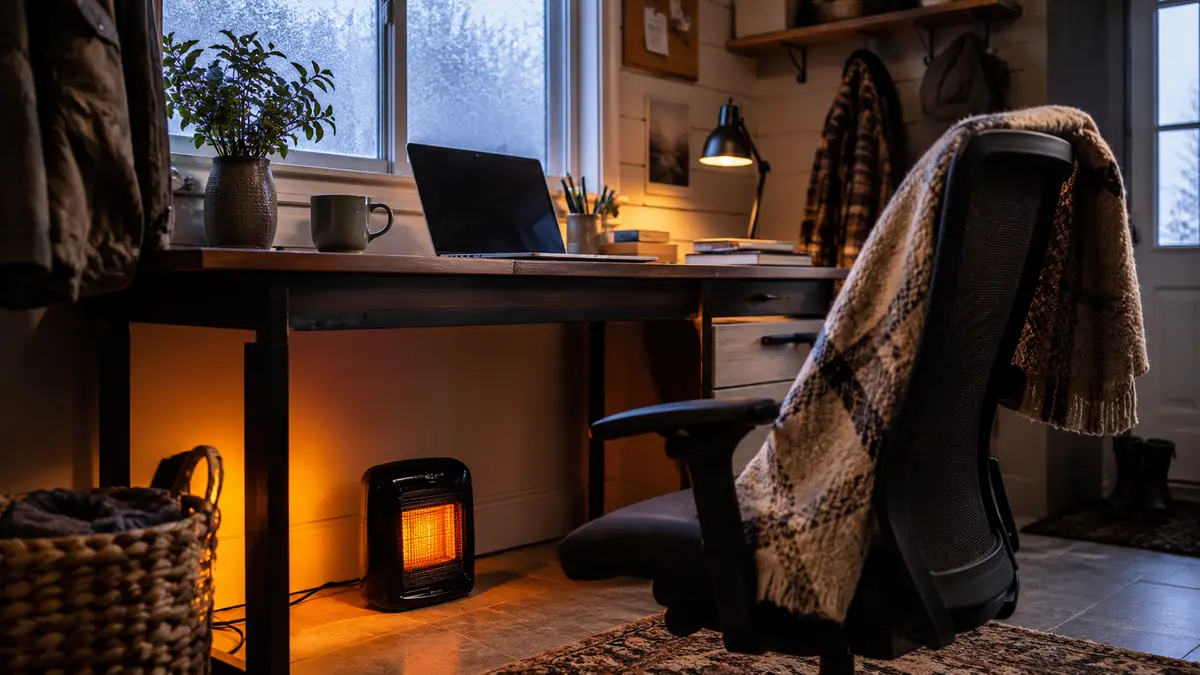
My home office in Clintonville is a converted mudroom off the back of the house, uninsulated exterior wall, a single-pane window from 1974, and a furnace vent that got rerouted to the kitchen during a remodel two owners before us. Every November the room drops into the low sixties by nine in the morning, and every November I go looking for the same fix. Three winters ago I bought the Amazon Basics Ceramic Mini Space Heater for eighteen dollars, mostly because I didn't want to spend real money on something I assumed would be junk. I was wrong about the junk part, and I was wrong about a few other things too, which is the actual point of this review.
Type 'desk heater' into Amazon and you'll get thousands of five-star reviews written by people who plugged it in once, felt warm air on their hands, and left a glowing comment before the box even hit the recycling bin. That's not useful if you're trying to figure out whether this thing survives a real Ohio winter under a desk that gets bumped by chair wheels forty times a day. I've now run this exact unit through three full heating seasons, and there are five or six things about it that nobody mentions until you actually own one.
The Quick Verdict
It does exactly one job, warming the two or three feet of space around your feet, and it does that job honestly for eighteen dollars. Just don't expect it to heat a room, and respect the wattage.
Amazon Check Today's Price →Wondering if an eighteen dollar heater actually survives a Midwest winter under a desk?
The Amazon Basics Ceramic Mini Space Heater is small enough to tuck against a CPU tower and light enough to move between rooms. See today's price and current availability before you decide.
Amazon Check Today's Price on Amazon →How I've Actually Used It
The heater has spent three winters exactly where a lot of buyers put theirs, on the floor under my desk, tucked between the CPU tower and the wall, pointed at my feet and lower legs. I run it most mornings from about seven to ten, then again in the late afternoon once the sun drops behind the house next door and the room loses whatever warmth it borrowed for a few hours. That's roughly five or six hours a day, five days a week, October through March, which is a more honest testing window than the two-day trial most reviews are based on.
I also didn't baby it. It's been kicked by my desk chair more times than I can count, buried under a stack of returned Amazon boxes I forgot were there, and left running while I stepped out for a twenty minute call in another room, which I don't recommend but which happened more than once. None of that killed it. The one thing that did change was the outlet I plug it into, and that's worth its own section, because it's the part almost nobody warns you about before you buy a small space heater for an older house.
I've also learned a couple of small habits from living with it daily instead of just testing it for a weekend. I switch it off before I step away from the desk for more than a few minutes, not because I doubt the safety features, but because it's just good sense with anything that generates heat on a wood floor. I also keep it a few inches clear of the CPU tower and any paper, which the manual actually diagrams out and which I ignored for about two weeks before I bothered reading it closely.

The Wattage Nobody Explains on the Listing
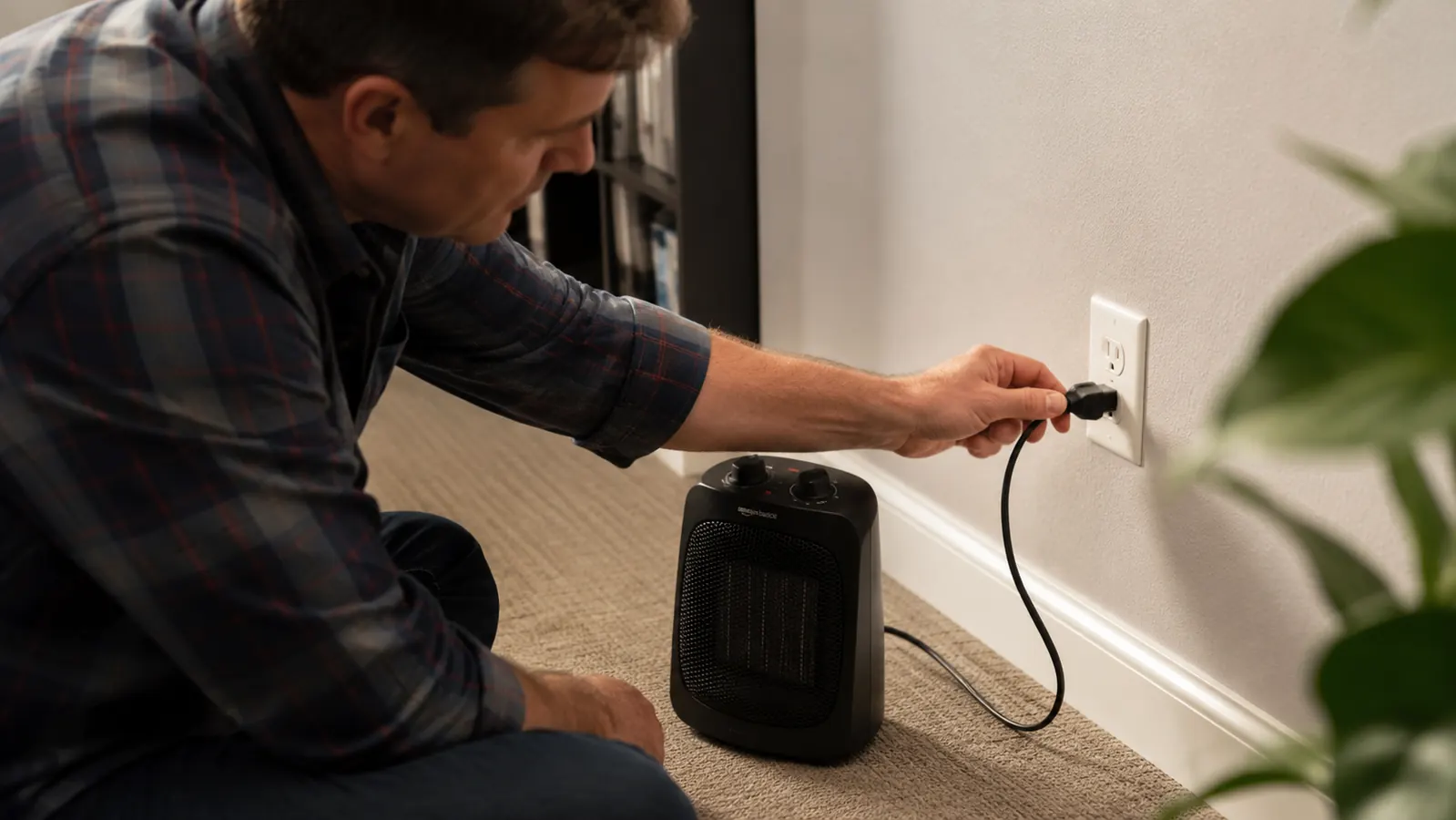
This unit pulls 500 watts, which sounds small next to a household hair dryer, but the listing doesn't tell you what that means for the outlet you're plugging it into. My office runs on a circuit shared with two lamps and a printer, original wiring from whenever this house was built, and the first winter I ran the heater off the same power strip as my monitor and a laser printer, the breaker tripped twice in one week. That wasn't the heater's fault exactly, it was mine for not respecting what 500 watts actually draws on an older circuit, but it's exactly the kind of detail a glowing five-star review skips.
Once I gave it its own outlet, direct into the wall, no power strip, no extension cord, the tripping stopped completely and hasn't happened again in two winters since. If you're setting one of these up, plug it straight into the wall. The manual actually says not to use an extension cord, and after my first winter, I believe them. It's a small habit change, but it's the difference between this thing working quietly in the background and becoming a recurring annoyance you blame on the wrong appliance.
The Auto Shutoff Isn't Marketing, I Actually Tested It
Every space heater listing claims tip-over protection and overheat protection, and most buyers never find out if that's real until something goes wrong. I tested it on purpose, twice, early on. I nudged it over with my foot while it was running full blast, and it cut off within a second, no delay, no warm-up lag before it shut down. I also let it run wedged against a stack of folders longer than I should have, to see if the overheat protection would actually kick in before anything got hot enough to worry about. It did, shutting itself off and needing a manual restart once things cooled.
That matters more than it sounds like it should, because this thing lives on the floor of a home office where cords get stepped on, chairs roll into things, and a dog occasionally naps two feet from a running heater. I've had cheaper units from other brands where the safety features felt like a checkbox on the packaging rather than something built to actually trip. On this one, both worked when I forced the situation, which is more than I expected for eighteen dollars.
The One Control It Doesn't Have
Here's an honest gap nobody puts in the bullet points. There's no thermostat dial and no adjustable heat setting. It's on, blowing at full output, or it's off. No low setting for a mild afternoon, no built-in timer, no way to dial it back if full blast is more than you need in a smaller room. For eighteen dollars I don't think that's unreasonable, but it's a real limitation if you were picturing something you could set and forget at a lower, steadier temperature.
In practice I've worked around it by just switching it off once I'm warmed up, then flipping it back on when the chill creeps back in twenty or thirty minutes later, rather than expecting it to hold a temperature on its own. It's a manual routine, not an automatic one, and if you're the kind of person who wants a heater that thinks for you, this isn't that heater. It's closer to a light switch than a thermostat.
What It Actually Heats, and What It Doesn't
Here's the part that generates the most confused one-star reviews, and it's not really the heater's fault, it's a mismatch of expectations. This is a personal heater, not a room heater. It warms the two, maybe three feet of space directly around it, which for me means my feet, ankles, and shins under the desk. It does not raise the temperature of my whole office, and if you're hoping it'll replace a unit rated for four hundred square feet, you're going to be disappointed no matter what brand you buy at this price and wattage.
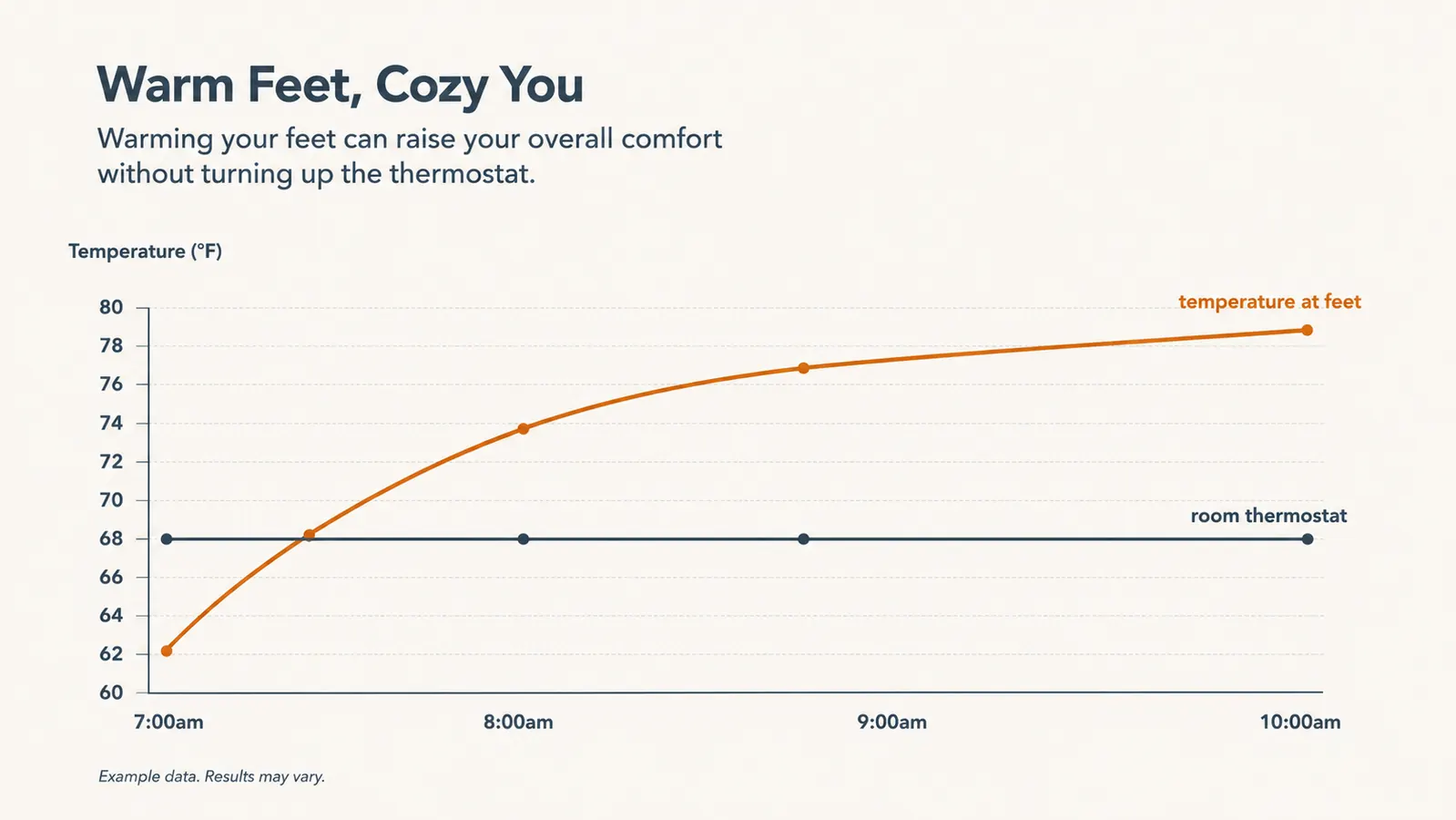
What it does well is take the edge off. My mudroom office sits around 61 or 62 degrees on a cold January morning before I turn anything on. With the heater running at my feet, I'm comfortable in a sweater within about ten minutes, even though the thermostat reading across the room barely moves. That's the honest way to think about this category of product, spot heat for your body, not central heat for your square footage.
The cost side backs this up too. At 500 watts running maybe five hours a day, this thing adds a few dollars a month to a power bill, not the noticeable jump you get from nudging the whole-house furnace up two or three degrees for a room you're only occupying part of the day. That math is the actual case for a personal heater like this, not comfort alone, but comfort without paying to heat rooms nobody's sitting in.
Three Winters In: Durability, Noise, and the Smell Nobody Warns You About
The first time you plug in any ceramic heater, including this one, you'll get a faint burning smell for the first few minutes. Nobody mentions this in the marketing, and it sends a fair number of first-time buyers straight to a one-star review convinced they got a defective unit. It's dust and manufacturing residue burning off the heating element, it's normal, and it goes away after the first two or three uses. Mine hasn't smelled like anything since that first week three winters ago.
The fan noise is a steady low hum, not silent, not obnoxious, closer to a laptop fan under load than anything that would interrupt a client call. It hasn't gotten louder or rattlier over three winters of near-daily use, which is more than I can say for a couple of cheap desk fans I've owned. The housing has some scuffs from getting kicked around under the desk, and the power cord shows a little wear near the plug, but the heating element itself still works exactly like it did the first winter I plugged it in.
Maintenance is close to nonexistent, which is either a relief or a nitpick depending on your patience for upkeep. I've wiped dust off the front grille with a dry cloth a handful of times a season, since a carpeted office floor kicks up more lint than you'd think. There's no filter to replace and nothing to clean internally, which also means there's not much you can do if the fan ever does start to fail. It's a sealed, disposable-by-design appliance, and at this price that tradeoff feels fair.
Where This Fits Against the Alternatives
Before you assume this is the only option, it's worth being honest about when a plug-in personal heater like this makes sense versus just cranking the thermostat for the whole house. I broke down the actual cost and comfort tradeoffs in Amazon Basics Desk Heater vs Cranking the Central Heat: Which Wins?, because the answer isn't as obvious as either side of that argument wants it to be.
If you want the season-by-season version of this same product, tracking how it held up week to week rather than this what-nobody-tells-you angle, I wrote that up separately in Amazon Basics Desk Heater Review: A Full Winter of Daily Use. And if you're still deciding whether a desk heater is worth adding to your setup at all, I laid out the practical case in 10 Reasons a Desk Heater Beats a Cold Home Office.
I've also recommended this exact heater to a handful of clients setting up a home office in a converted garage or spare bedroom that the main furnace never quite reaches. It's rarely the whole fix, but it's a cheap enough add-on that testing it costs less than a single dinner out, and it either solves the problem or it doesn't, without much financial risk either way.
What I Liked
- Tip-over and overheat protection both worked when I tested them on purpose
- Genuinely warms your feet and lower legs within about ten minutes
- Held up through three full winters of daily use with no drop in performance
- Cheap enough that replacing it isn't really a financial decision
Where It Falls Short
- Not a room heater, it only warms two to three feet around it
- 500 watts is enough to trip an older circuit if you share the outlet
- No thermostat or adjustable heat setting, it's full blast or off
- Faint burning smell the first few uses, which alarms some new owners
- Short cord and a manual that explicitly says no extension cords
The five-star reviews and the one-star reviews are usually describing the exact same heater. The difference is whether the buyer understood what an eighteen dollar personal heater was actually built to do.
Who This Is For
This makes sense for anyone working from a room that never quite gets warm enough, especially if the fix you actually need is warm feet and ankles rather than a warmer room. It's a good match for apartments and older houses with uneven heating, for anyone who works near a drafty window, and for anyone who's tired of wearing a blanket at their desk in October. If you respect the wattage and plug it straight into a wall outlet, the Amazon Basics heater does its one job well, day after day, without drama.
Who Should Skip It
Skip it if you're trying to heat an entire room, a garage office, or a basement, this isn't built for that and no eighteen dollar heater in this category is. Skip it too if your home office runs on old, already finicky wiring and you're not willing to give it a dedicated outlet, because you'll spend more time resetting breakers than staying warm. And if you have small kids or pets who can't be trusted around a floor-level heating element, even a well-designed one with tip-over protection, this isn't the safest setup for your space.
Three winters in, it's still doing exactly what an eighteen dollar heater should do.
If your home office runs cold from October through March, see today's price on the Amazon Basics Ceramic Mini Space Heater and decide whether spot heat at your feet is the fix you actually need.
Amazon Check Today's Price on Amazon →