

Nobody warns you about the refill schedule until you're the one filling it at nine in the morning, mid video call, hunting for a pitcher of water because the light on your GENIANI humidifier just switched from steady blue to blinking red. I've set up humidifiers for clients across a dozen Columbus home offices over the years, mostly ranch houses and finished basements where the furnace dries the air out by October, and the GENIANI is the one I keep pointing people toward. Not because it's flawless. Because it's honest about what it will and won't do once you get past the box.
This isn't the long-term field test. I already wrote that one, tracking three months of daily use through a full Ohio winter. This is the version I wish someone had handed me before I bought my first ultrasonic humidifier, the stuff nobody puts in a product listing, the refill hassle, the cleaning you actually need to do, and how long this thing runs on a full tank versus what the packaging implies. I ran this specific unit on my desk for six straight weeks, no swapping it out, no cherry-picking good days.
The Quick Verdict
It genuinely helps with dry office air and sinus irritation, but the tank is smaller than it looks, and skipping the cleaning routine will bite you within a month.
Amazon Check Today's Price →Wondering if a small desk humidifier can actually fix dry office air? See what it actually does first.
The GENIANI runs quiet enough for calls and refills in under a minute, but the tank size surprises people. Check today's price and current availability before you add one to your desk.
Amazon Check Today's Price on Amazon →How I've Actually Used It
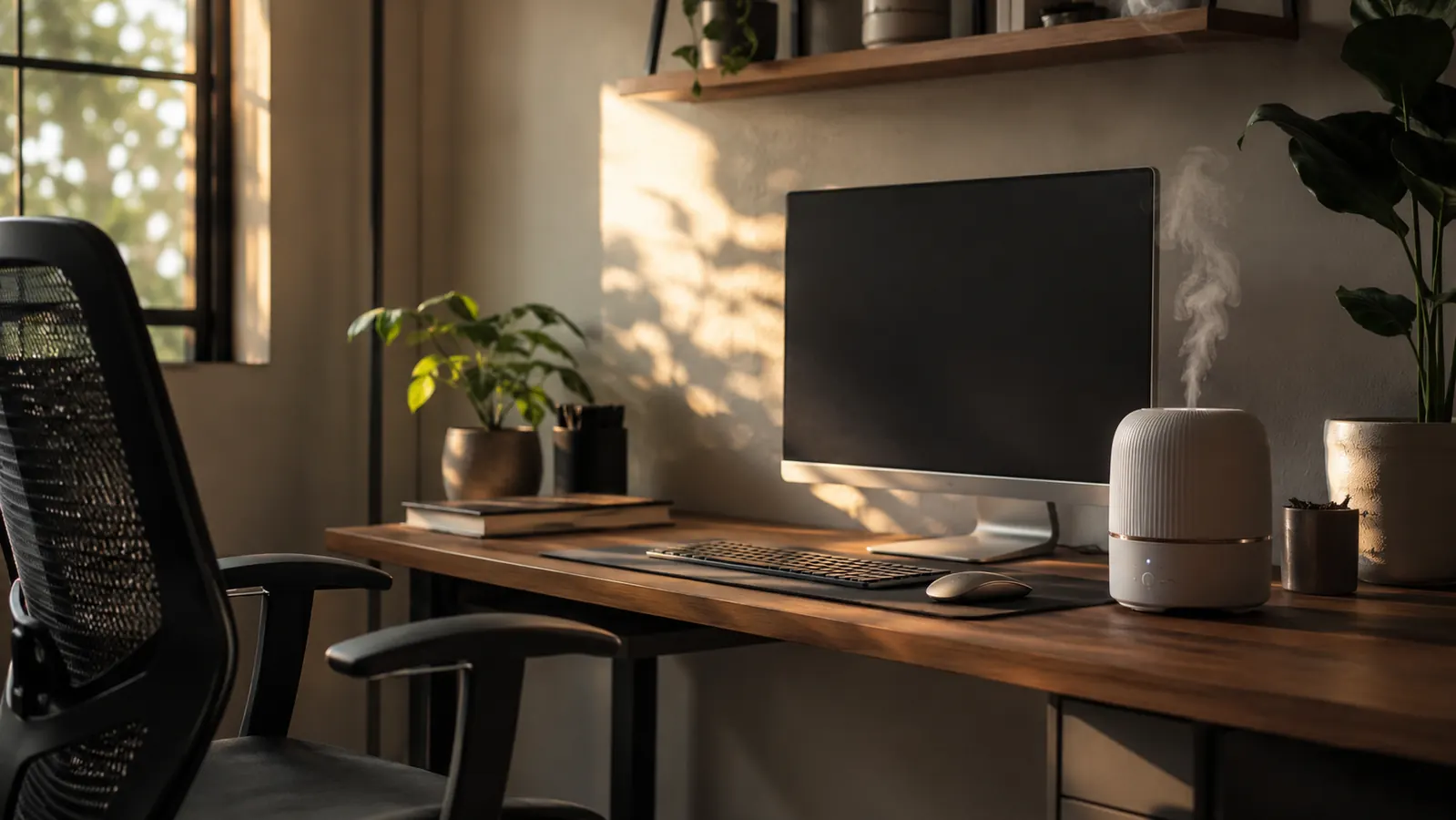
I run a humidifier the same way most of my clients would, which is to say imperfectly. It sits on the corner of my desk next to my monitor, filled most mornings before my first call, sometimes not filled until the air already feels like it's pulling moisture out of my sinuses. I didn't baby this unit or run it in some ideal lab scenario. It's been through six weeks of actual home office use in a converted spare bedroom in Grandview Heights, forced-air heat running most days, the kind of dry winter air that makes your throat feel like sandpaper by lunch.
I tracked three things every day: how many times I refilled it, how long a full tank actually lasted on the low setting versus the high setting, and whether I remembered to clean it that week. That last one matters more than people think, and I'll get into why. I also ran it next to a cheap hygrometer, one of those thirty dollar humidity and temperature readers, just to see if the GENIANI was actually moving the needle on the room or just making me feel like it was.
Desk placement turned out to matter more than I expected. The first week, I had it sitting about three feet away, tucked behind my monitor where it looked tidy, and I barely noticed a difference in how my eyes felt by afternoon. Once I moved it inside arm's reach, close enough that I could see the mist drifting past my keyboard, the effect on my sinuses and a dry patch under my left eye that always flares up this time of year was obvious within days. A desk humidifier this small is really a personal humidifier, not a room humidifier, and where you put it changes almost everything.

The 250ML Tank Nobody Mentions in the Marketing Copy
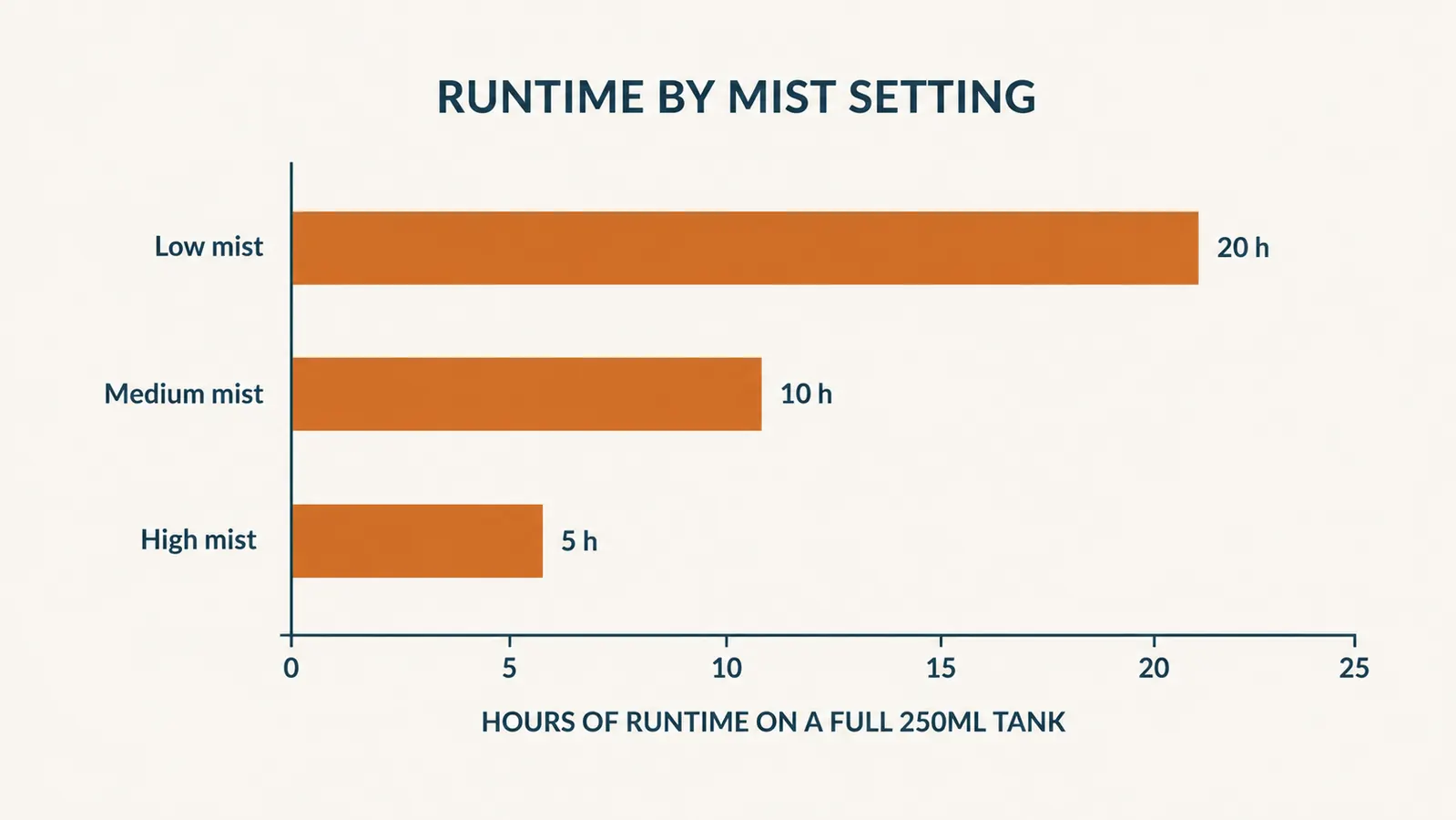
Here's the first thing that surprised me, even though I should have caught it reading the spec sheet before I bought it. The GENIANI holds 250 milliliters of water, which sounds like plenty until you actually use it. On the high mist setting, I was refilling it every four to five hours. On low, I stretched that to maybe eight or nine hours, but the mist output on low is thin enough that I questioned whether it was doing much of anything in a room bigger than a small office.
I also noticed the tank drained faster on days I had my desk space heater running nearby, which tracks, since warmer, drier air pulls moisture out of the mist faster and makes the humidifier work harder to keep up. If you're pairing this with a small heater at your desk this winter, plan on refilling more often than the spec sheet time frames suggest, because heat and humidity are fighting each other the whole time.
That means if you run this thing overnight or leave your desk for a full workday, you're coming back to an empty tank and zero humidity output for however many hours it sat dry. The auto shut-off kicks in when the water runs out, which is good for safety, but it also means the humidifier just stops working silently. No alarm, no reminder on your phone. You find out it's been off for three hours because your eyes are dry again.
For a desk humidifier, I don't think this is a dealbreaker. It's meant to sit next to you, not run unattended in an empty room. But if you were picturing something you fill once and forget for a few days, that's not what the GENIANI is, and nobody selling it tells you that upfront.
What Cleaning It Actually Requires, and What Happens If You Skip It
Ultrasonic humidifiers work by vibrating water into a fine mist, and that process doesn't care what's floating in your tap water. Minerals, whatever's been sitting in your pipes, all of it gets aerosolized right along with the water vapor. If you don't clean the tank regularly, you get a white dust settling on your desk and monitor within a couple weeks. I know because I skipped cleaning mine for the first ten days of testing, partly on purpose, to see what would happen.
What happened was a faint white film on my desk mat and the base of my monitor stand. Nothing dramatic, but noticeable enough that I wiped it down twice in one week before I connected the dots. Once I switched to distilled water and started rinsing the tank every three or four days with a bit of white vinegar, the dust stopped completely. That's the trade nobody spells out on the product page. Use tap water and skip cleaning, and you're breathing in more than moisture.
There's also a mold risk that's easy to overlook with a tank this small. If water sits in the reservoir for several days without running, whether because you took a short trip or just left it full over a weekend, a musty smell can start showing up in the mist itself. I ran into that once after leaving town for four days with a full tank still sitting in the base. Emptying it, giving it a full vinegar rinse, and letting it air dry completely before refilling took care of it, but it reinforced that this isn't a set-and-forget appliance.
The cleaning itself takes about two minutes. Empty the tank, rinse, a light vinegar scrub once a week if you're using tap water, dry it before refilling. It's not hard. It's just one more small chore that a lot of buyers don't budget for when they picture setting a humidifier on their desk and never thinking about it again.
How Long It Actually Runs, and What the Mist Output Really Feels Like
The listing advertises up to sixteen hours of run time, and technically that number is achievable, but only on the lowest mist setting with the tank completely full, which in my experience produces mist so light you'd struggle to see it from across a desk. Realistically, for the kind of visible, noticeable humidity boost that actually helps with dry sinuses and cracked knuckles in a Columbus winter, I was running the GENIANI on medium to high, which cut that run time down to somewhere between five and seven hours.
The sound is genuinely quiet, close to a soft hiss you stop noticing within a few minutes, which matters if you're on video calls most of the day. I never had a client or coworker ask what that noise was during a Zoom call, which is more than I can say for a couple of the bigger console humidifiers I've tested. The output is a fine, cool mist, not a warm steam, so it won't fog up your glasses or leave your desk feeling damp if it's aimed away from your keyboard.
The Auto Shut-Off Feature, and the One Quirk That Caught Me Off Guard
The auto shut-off is a nice safety feature on paper, and it works exactly as advertised. Water runs low, the light changes, the misting stops. What caught me off guard is how sensitive the sensor seemed to be on an uneven desk surface. I had it sitting on a slightly tilted coaster for about a week without realizing it, and the unit shut off with what felt like a third of the tank still in it, because the water had pooled to one side and tripped the low-water sensor early.
Once I set it on a flat section of desk, that stopped happening completely, so it's a minor thing, not a defect, but it's exactly the kind of detail that would confuse someone into thinking their unit was broken when it's actually just sitting on an uneven surface. If yours seems to be shutting off early, check the level of whatever it's sitting on before you assume something's wrong with the humidifier itself.
Alternatives I Considered Before Settling on This One
Before I committed to running this as my main desk unit, I looked seriously at going bigger, a full room humidifier meant to cover 400 or 500 square feet instead of just the space around my desk. I wrote up the full side-by-side comparison in GENIANI Desk Humidifier vs a Large Room Humidifier, because the honest answer depends on whether you're trying to fix one desk or an entire room.
I also dug into the actual reasoning behind why dry office air causes the symptoms it does, dry eyes, cracked skin around the knuckles, that scratchy throat by 2pm, which I laid out in more detail in 10 Reasons a Desk Humidifier Helps Dry Office Air. If you want the fuller three-month picture of daily use through a whole Columbus winter, including how the unit held up over time, that's in GENIANI Humidifier Review: 3 Months of Fighting Dry Office Air.
Cost factored into that decision too, since it's usually the first question clients ask. A whole-house humidifier tied into the furnace runs power and water through ductwork and typically needs a plumber to install correctly, plus a filter to replace on a schedule. The GENIANI plugs into any outlet, costs a fraction of that upfront, and the only ongoing expense is distilled water if you want to skip the mineral dust. For someone renting an apartment or not ready to modify their HVAC system, that difference in complexity and cost ends up being the real deciding factor, not just how much square footage each option covers.
What I Liked
- Quiet enough to run through video calls without anyone noticing
- Refills in under a minute and starts misting almost immediately
- Cool mist output that won't fog glasses or dampen your desk
- Auto shut-off protects against running the tank dry unattended
- Priced low enough that trying it isn't a real financial risk
Where It Falls Short
- Small tank empties in as little as four to five hours on high
- Needs distilled water and a weekly rinse to avoid mineral dust
- No alert when it shuts off, so you may not notice it stopped
- Not enough output to humidify more than the immediate desk area
The GENIANI never pretended to be a room humidifier. I did, for about two weeks, before the water usage set me straight.
Who This Is For
This makes sense for someone sitting at one desk for most of the day who wants relief in the immediate two or three feet around them, not someone trying to humidify a whole room or a shared office. It's also a good fit if you're testing whether humidity is even your problem before spending real money on a whole-house system or a bigger console unit. At this price point, the GENIANI is a low-risk way to find out if dry office air is actually behind your dry eyes and scratchy throat before you commit to anything bigger. If you're already sold on active humidity control but want the reasoning laid out plainly, it's worth reading through before you decide on unit size.
Who Should Skip It
If you're gone from your desk for stretches of six or more hours, or you were hoping to fill it once and forget about it for a few days, this isn't built for that. Skip it too if you're not willing to clean the tank regularly, because skipping that step is how you end up with dust settling on your monitor instead of moisture in the air. And if you need to cover a room bigger than a home office, not just the space immediately around your chair, look at a larger unit instead. Anyone who has already tried an ultrasonic humidifier and hated the upkeep will likely feel the same way about this one, since the maintenance is the tradeoff, not the mist quality.
Six weeks in, still refilling it most mornings, still glad I bought it. See today's price.
The GENIANI won't humidify your whole house, and it won't run unattended for a full workday. For what it actually is, a quiet desk-side fix for dry winter air, it's held up. Check current availability and today's price before you decide.
Amazon Check Today's Price on Amazon →